STORIES
Eritrea: Sardine Powder vs Malnutrition
With IFAD’s support, Eritrea turns underused small pelagics into protein powder—training communities and building a value chain for inland diets.
Eritrea
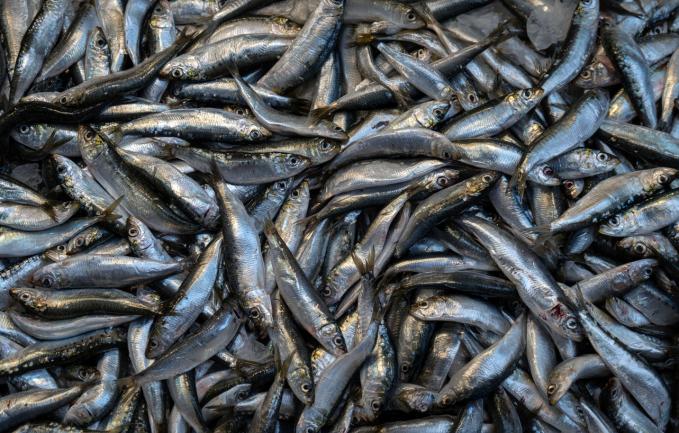
Compared to neighboring countries, Eritrea has been underexploiting its marine and fisheries resources for decades, despite boasting a coastline of approximately 1,700 kilometers, including both islands and the mainland, and with very low average pollution levels. This has contributed to a diet that is generally lacking in animal protein, linked to both geographic, social and cultural factors.
In recent years, the government has made substantial investments in inland regions, building dams to retain water and constructing approximately 330 ponds, 70 of which are filled with various fish species. Eritrea has a maximum sustainable yield of about 80,000 Tons/year, out of this, 62% of the total stock, about 50,000 tones, are small pelagic fish such as Anchovies, Sardines and Harrine, these are the main source of various nutrients such as protein, fat (Omega-3), minerals, vitamins such as vitamins (D, B), calcium, phosphorus and, iron.
Most of the small pelagic fish are used for animal feed, also because Eritrean mountain communities, and inland communities in general—where the majority of the population lives—have always been reluctant to consume these seafood products, due to a lack of awareness of the nutritional properties of fish, a lack of suitable fishing equipment, and cultural considerations (partly related to the role of the Orthodox Church, which foresees various fasting days during the year, in which there is no consumption of proteins, resulting in a change in food habits over time). These are communities that tend to base their diet mostly on cereals and legumes, and in which cattle and sheep farming also serves more as a supporting role in agricultural work or as a reserve of wealth, rather than a source of meat consumption.
"Eritrea has been underexploiting its marine and fisheries resources for decades."
In order to address these structural shortcomings, the Eritrean government, through the Fisheries Resources Management Program (FreMP) and with the support of IFAD, launched a project in 2016. Expected to benefit approximately 17,500 poor households across six regions of the country, the project aims to strengthen coastal fishing and the rational and efficient use of fish resources, thus improving the living and nutritional standards of coastal and mountain communities, by increasing their intake of animal proteins.
This program primarily aims to reverse these trends by improving awareness, improving or acquiring skills, and obtaining suitable equipment for fishing and fish processing. In this regard, IFAD finances and provides technical expertise directly to the Ministry of Marine Resources, in order to initiate a capacity-building process, promote sustainable fishing practices, and develop value-added products, primarily using small-sized fish, which tend to be the most underutilized.
One example is powdered pelagic fish such as sardines and anchovies, which is rich in protein and relatively easy to process. "We focus primarily on small pelagic fish, which migrate from the Indian Ocean to the Red Sea, off our coast, from November to February," explains Misgina Tesfu, director of the Department of Fisheries Development at the Eritrean Ministry of Marine Resources. "We primarily conduct campaigns to teach the community how to use this powder, often in soups or as a spice," Tesfu continues. With the majority of adult men in the communities engaged in fishing, awareness campaigns are aimed primarily at young people and women. "In coordination with COMESA, we train women in particular on how to dry the fish, how to grind it, and how to package it," Tesfu adds.
"Powdered pelagic fish is rich in protein and easy to process."
Small pelagic fishing is a sector that can create employment opportunities for all age classes of the community, and can be dried and cooked and supplied in the form of powder. Their nutritional content and health contribution require skilled cleaning, care and proper drying and processing methods to produce high quality dried fish for public consumption. Properly produced dried fish plays an important role in enriching the nutrient content of food and improving livelihoods and economic growth. In addition to being easy to transport and relatively indestructible, it is a great help to the remote rural section of the community to eat fish food, and is much better to preserve.
As Tesfu explains, entire coastal communities participate in the fishing and processing of this powder, which is then delivered to various areas of the country. "In the whole of Eritrea, we only have 900 fishing boats, but even the residents of coastal villages actively support fishing, hauling in the 200-meter nets that are cast from boats near the coast, where thousands of sardines and anchovies pass," Tesfu explains. Once harvested, the fish is left to dry in the sun, then ground and packaged, usually by community women.
"We primarily conduct campaigns to teach the community how to use this powder."
Currently, thanks to the financial support provided by IFAD—which is expected to finance the construction of a fish processing plant, making this process more systematic and industrial-scale—the sardine powder is distributed free of charge within communities, especially the most remote ones, both in the mountainous areas of central and northern Eritrea and in the southern coastal region, the Southern Red Sea, which is also the least populous. "The idea is first and foremost to create a habit of this type of consumption among the population," Tesfu concludes. Then, once the construction of suitable processing plants is complete, the anchovy and sardine powder will be officially released onto the internal market, taking into account the purchasing power of the various communities.